
Choosing the Right Expedition Cruise
What is an expedition cruise?
Technically, an expedition cruise is a voyage that contains an element of education as part of its on-board programme but in reality, they are often much, much more than that. Originally they were voyages to the most extreme and difficult to get to places on the planet. Many still are that, BUT, many are also a much more diluted version of this and choosing a voyage that will give you what you want is far from easy.
Joining an expedition cruise is an exciting way to explore some of the most remote and challenging regions of the planet. It can offer an element of comfort (variable), it might have a team of expert guides and naturalists and hopefully it will result in the trip of a lifetime. This blog is constructed to provide guidance in how what to look for, and how to choose the right expedition cruise for you.
What we do and Our experience
Dan and Rachael have been involved in the expedition industry for many years. Dan’s first voyage was back in 1999 as part of the first youth expedition to Antarctica and since then they have spent thousands of days aboard vessels working in a plethora of roles from Photographic coach and Ornithologists, Naturalist and Marine Mammalogist to Citizen Science coordinator to Expedition Leader. This breadth of involvement across six different companies has created a wealth of knowledge around what goes into making an Expedition cruise successful and what you might want to consider when choosing the correct expedition cruise for you.
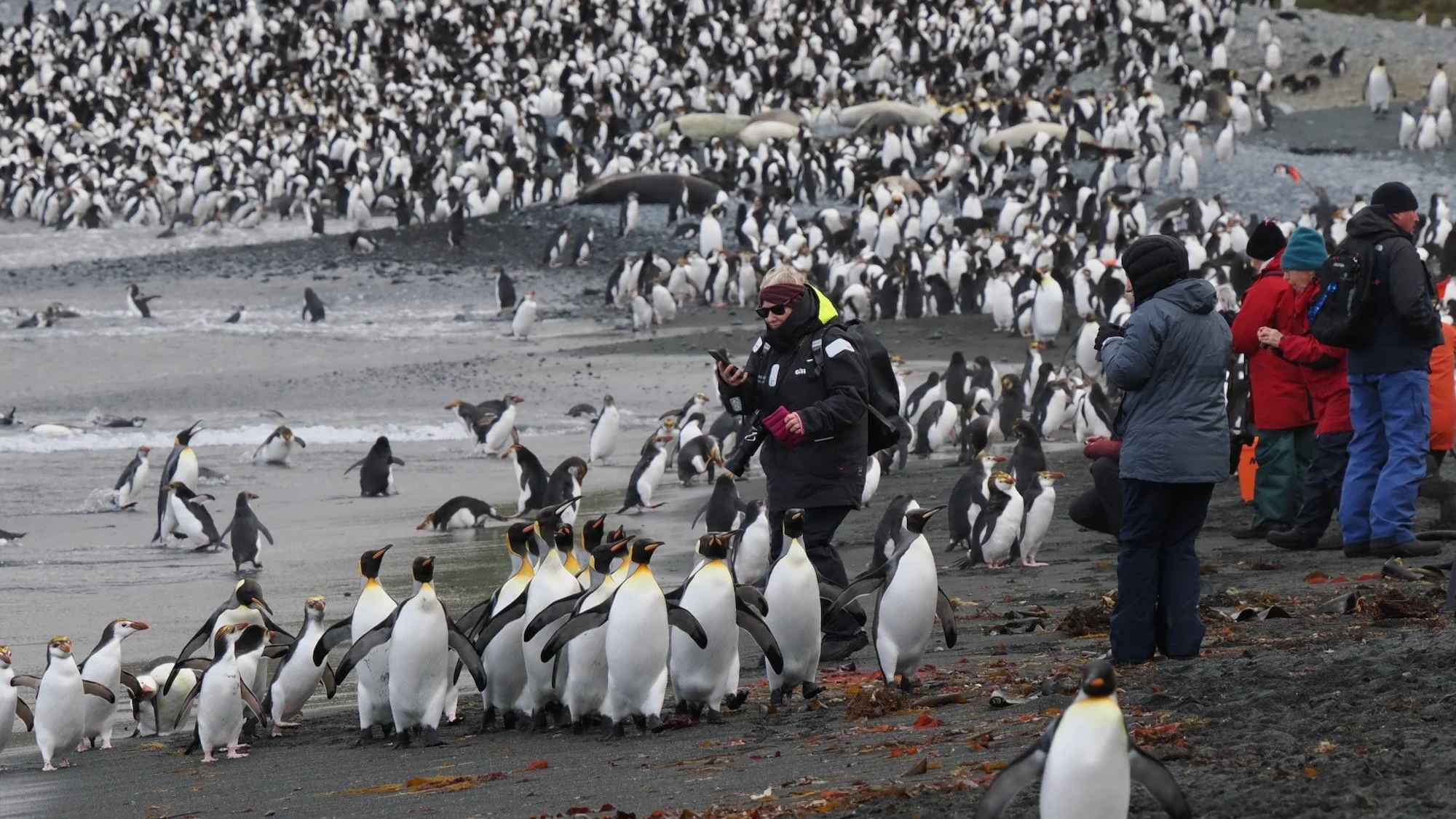
Expedition voyages can take you to some of the most spectacular, remote and wildlife-rich places on the planet
Points to Consider
There are lots of things to consider when choosing the right expedition cruise. The factors will be elements that are important to you, things that float your boat (pardon the pun) and also maybe some factors that are out of your control but still significant. The following are likely to be the main things that you might consider:
When & where
What are your main interests, the drivers behind joining the expedition
Ship size
Potential operators
Cost
Climate/weather/unexpected changes
Destinations
Expedition voyages can take you to the vast majority of the worlds oceans and seas if you wish. Some areas such as the Antarctic and the Arctic have become synonymous with expedition voyages but there are also numerous expedition voyages through tropical and temperate regions as well.
What do you want to see?
Your preferred destination will no doubt be reflective of what you want to see and, in general, many guests choose an expedition voyage to see wild, difficult to reach places, wildlife and often historical or culturally significant places too.
In general we have found that more luxurious the vessel the more dilute the level of interest is within the guests, i.e. it becomes more about the voyage and less about key focal areas. Some voyages have been designed to focus on specific areas of interest which can be as varied as history in the Ross Sea to Wool around Scotland but most will take in a mix of interests.
The Ships
In comparison to standard Cruise vessels, Expedition Cruise ships are a fraction of the size. The smallest may take 8 passengers and the largest would be around 500 passengers. The key should be that all of them are designed and built in a manner that allows the passengers to access remote and rugged destinations.
The rapid expansion of the industry in the last decade has seen a considerable number of new vessels being built but many older vessels are also still in operation and all deserve consideration when picking the correct voyage. An older vessel doesn’t necessarily mean less comfort and newer vessels don’t necessarily mean greater capability, in fact in some cases it can be the opposite!
When choosing the right expedition cruise for you, you want to look at the capabilities of the vessel in the area you will be visiting. Things to consider: Ice class, stabilisers, age and construction location. If you are visiting the Antarctic you may wish to check that you vessel has a suitable ice class. Most Antarctic expeditions don’t require an icebreaker but a vessel with some ability to push through ice is often desirable, especially in remote areas such as the Ross Sea. A few of the older vessels lack stabilisers. Whilst not essential, stabilisers do make passages through swell significantly more tolerable! You may also look into the history of the vessel and where it was constructed. Many of the vessels built in the late 1980’s and 1990’s were done so in European ports and have been constructed incredibly well, where as some newer vessels have been constructed elsewhere and aren’t as capable at coping with the Southern Ocean!
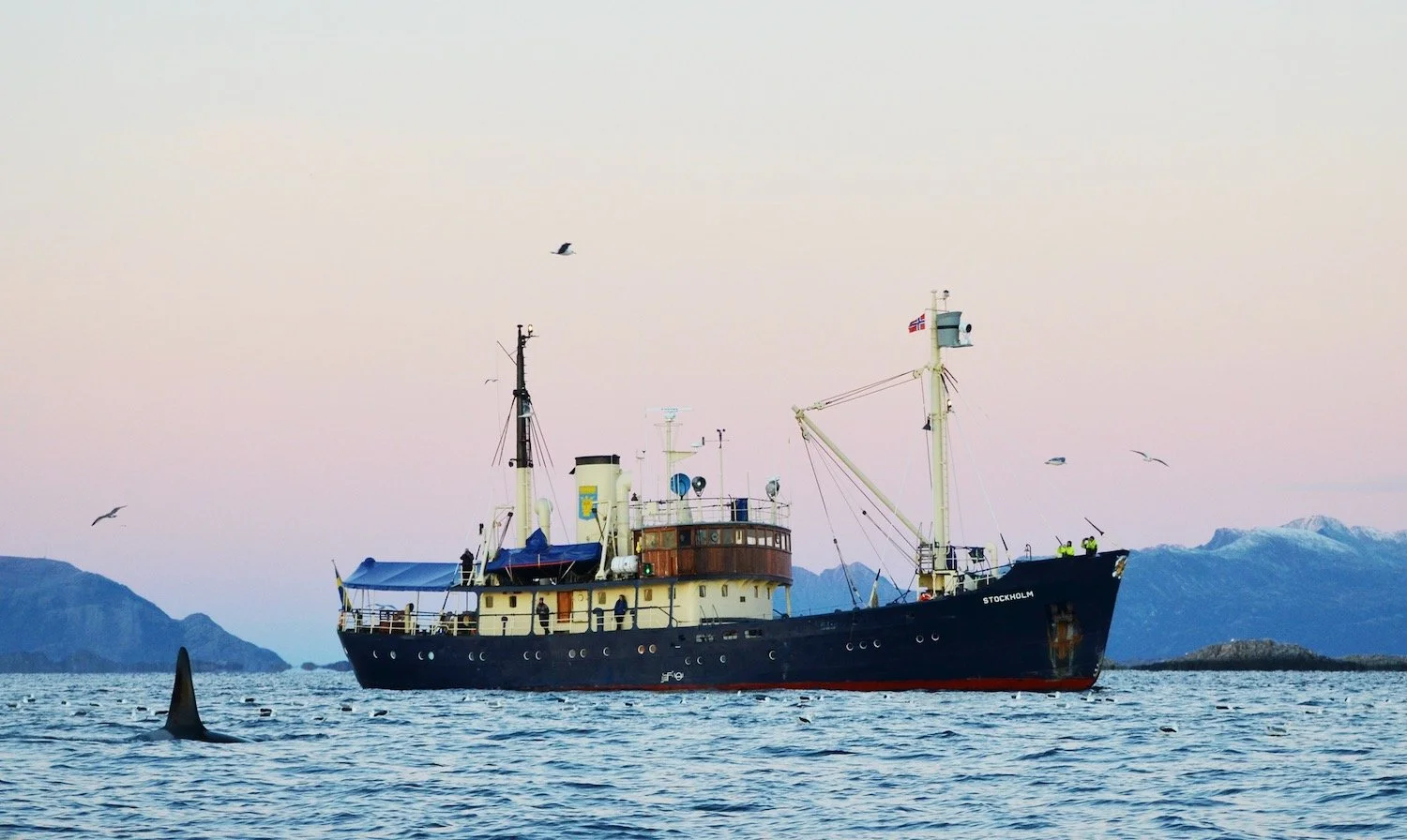
Vessels range from ultra luxury 300 passenger vessels to intimate and classic 12 passenger vessel; the experience is very different (© Polar Quest)
Limitations to where you can go
Just because you’re on a ship sadly it doesn’t mean you can go anywhere and everywhere in the ocean. Some countries have restrictions in what you can do and where you can go, other places limit the number of people that can be landed at any one time or over the course of a day (or both!).
As examples, the Republic of Ireland has strict requirements around zodiac driving and in general expedition voyages in this part of the world have limited use of zodiacs. Japan is also similar and zodiacing around USA waters requires drivers to have a US boat license. So don’t expect to be out on the water in inflatable boats as much on voyages to these destinations.
Antarctica has limits on landing numbers, for instance only 100 passengers are allowed on shore at any one time, this means that if you are on say a 300 passenger ship you will almost certainly have time on the ship whilst the rotation of passengers ashore occurs. Ultimately this leads to less time on shore than with a smaller vessel and can also lead to fewer landings.
Which company to travel with
This is the million-dollar question and will very much depend on many of the factors mentioned above, in fact you will probably want to, or need to take into account all the factors!
Many companies operate in Antarctica for instance, and you can travel for comparatively little money to the area on a 500-passenger vessel but it will be a very different experience to paying more and being on a 130-passenger vessel.
In general, we recommend the smaller vessels (<150 pax). They are a more intimate experience, normally have excellent and well qualified guides, have longer ashore and can often manoeuvre more efficiently in spaciously constrained areas. The downside is they will probably experience more motion than a 350-passenger ship but it’s a smaller price to pay for a more involved experience.
Responsible operators
Trying to ascertain whether an operator is a responsible one or not is difficult, especially as in general we have to go on the public-facing media we are presented with.
Assessing responsibility can include elements such as whether the company supports science in remote areas, are they offering a citizen science programme, do they incorporate and promote local operators and providers in their shore-based activities, what type of fuel and fuel efficiency, and so on.
There are also other elements to responsible operators that are not apparent to most guests such as how does the Bridge team operate around wildlife (i.e. are they respectful of required distances to whales, aggregations of birds etc), how does the company treat its crew and staff, and how does the company promote its environmental and sustainability credentials? Some companies are very good at promoting their green credentials, but careful wording and clever marketing doesn’t always match the reality.
Expect the unexpected
Expeditions are all about being flexible and expecting the unexpected. Whilst you will book a voyage based on Plan A, there’s a pretty high chance that the expedition you experience might be Plan C, D or even E! This can be down to a plethora of reasons but weather is the commonest cause of changes. It is very normal to switch days around and find alternative sites to visit if the weather dictates, and rest assured that behind the scenes there is a lot of work going into reading wind and swell charts, looking at options and working to maximise the enjoyment you get out of the expedition.
It is also worth pointing out that extreme weather is becoming more frequent as the global climate changes. This can lead to more intense and longer lasting storms and we should all be prepared for changes that are out with our control!

Never under estimate the power of the ocean and weather systems and be prepared to be flexible
Value for Money
The most expensive isn’t always the best! Yet, the cheapest won’t necessarily give you all you want (but it might not be the worst!).
It’s all qualitative and whilst value is a consideration, the right expedition cruise is likely to be a combination of qualitative features whether that be the expedition element or the cuisine.
In general larger vessels are able to offer cheaper berths but this comes with the hurdles that travelling on a larger vessel presents such as rotational landings in the Antarctic, restrictions on where certain vessels can visit or berth and a reduction in the personability of the experience, i.e. smaller ships often have a family feel and you can get to know most staff and a larger number of the guests.
So in short, don’t automatically go with the cheapest, or the most expensive!
Join us on Expedition
If you are thinking of joining a voyage then why not travel with Dan & Rachael on their expeditions. They will be working on a number of voyages which can all be found on the Expedition Cruise page of the website. In 2027 Dan and Rachael in Micronesia, Arctic Norway and the New Zealand and Australian Subantarctic Islands; join Rachel Bigsby for a Photographic expedition to the Hebrides, or for the ultimate expedition voyage around remote and rugged Scotland register your interest in our very own Wild Discovery Wild Scotland Expedition in 2028. You can read all about our highly successful cruise in 2026 on our blog here.