
Complete (& concise!) Guide to Moth-ing!
Getting started
Mothing is a bit like Christmas, every day. You can find moths on literally every day of the year and the species, diversity and abundance changes through the seasons and as you explore different habitats. The UK is home to over 2700 species of moth (compared with 60 species of butterfly) so the scope for seeing and enjoying some stunning species is huge. All you need is interest, enthusiasm and an inquisitive mind to explore a world that few venture in to. Their names are also great value (the Victorians had imagination when they started looking at moths) so you can get excited about seeing a Druid or an Alchymist, be left scratching your head at a Suspected or an Anomalous and justifiably go into a wood at night to look for an Old Lady.
When and Where
Mothing normally starts at home with an insect drawn to a window or light and expands from there. Many people run garden moth traps and some venture further afield to other sites, reserves or even migrant hotspots in search of moths but the fact that you can record hundreds of species in a garden normally means this interest can be propagated over a cuppa in the morning in your own garden; it’s an easy and rewarding hobby. The rise of more portable and light weight traps has allowed people to explore further afield and the shift to LED traps over the older (and VERY bright) Mercury Vapour (MV) traps has also meant that mothing in your garden isn’t going to also illuminate your entire street and thus becomes a tad more tolerable for your neighbours!
Moths fly all year round so you can put your traps on any night of the year but in general the warmer the better and moths also like humid nights too, even light drizzle can be good. Strong winds tend to yield lower catches and the brighter the moon the lower the catch.
Moths can be found from sea level to the summits of the highest Munro’s in Scotland. They are not exclusively nocturnal either, in fact there are a plethora of day-flying moths. These you can normally search for on calm, bright, warm days around nectar sources or by sweeping a habitat with a net, so you can look for moths at any time of year, any time of day, anywhere!
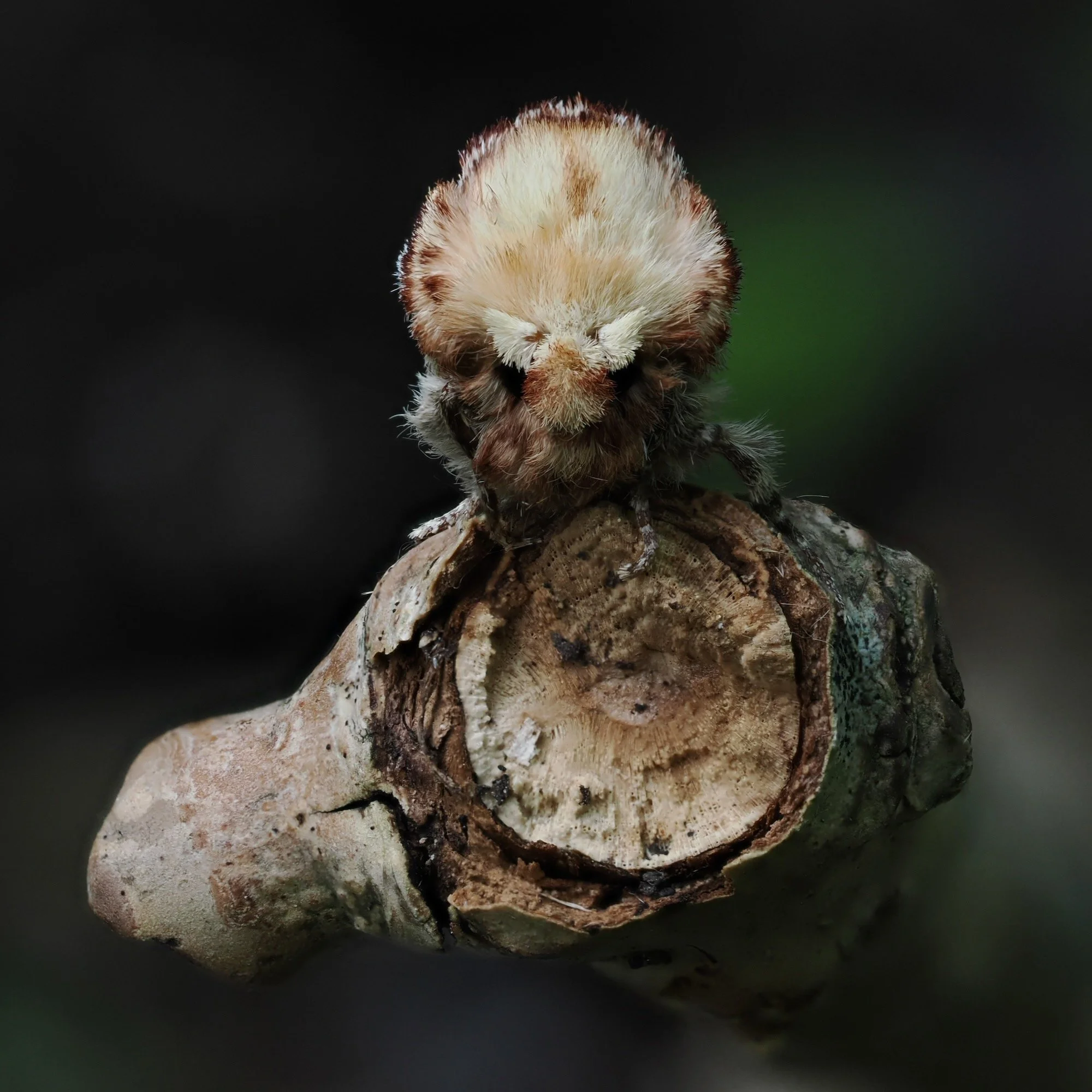
Buff Tip moth showing off its immense camouflage
Books, Identification & Recording
The UK is fortunate enough to have one of, if not the best study of lepidopteran fauna on the planet and as a result has an extensive, comprehensive array of associate literature and online resources.
There are a number of great field guides which will become essential reading. If you just want to focus on the larger moths (known as Macro moths) then Field Guide to the Moths of Great Britain and Ireland Waring, P. Townsend, M. & Lewington, R. (2018) is the best guide to pick up. If you then expand into Micromoths then Field Guide to the Micro Moths of Great Britain and Ireland Sterling, P. Parsons, M. & Lewington, R. (2023) compliments the macros guide. I also use British and Irish Moths: A Photographic Guide by Manly, C. (2021) which compliments both the aforementioned guides perfectly. There are a number of other more specific guides which can help with the identification of tricky groups such as pugs.
There are a number of online and app-based identification platforms too. Apps such as Obsidentify and even Google Lens can hugely assist in identifications but these should act as a first stage in the process to be followed up with cross reference to the above field guides. Facebook has many different groups and pages that are superb platforms for finding out more about moths, asking for identification help and just the opportunity to ogle at other peoples exciting finds.
Recording your finds is an important part of the enjoyment of mothing. Every record has value and despite the UK being the best-known country in the world for its moths there is still much to learn and document especially as we witness very rapid shifts in the ranges of some species (for instance some Footmen have expanded north several hundred kilometres in just a decade).
You can send your records directly to the county moth recorder. Contact details for county recorders can be found on the Butterfly Conservation Website here.
Apps such as iRecord have a specific moth survey function and this feeds directly to county recorders. You can also add images to records which helps the recorder to verify more unusual observations. iNaturalist will also filter records to recorders and is good for incidental records whilst out and about but in general isn’t quite so user friendly for the county recorders.
There are also a couple of national schemes that you can partake in including Butterfly Conservations National Moth Scheme and the Garden Moth Scheme
Traps
Most people will, at some point, invest in buying or making a moth trap. It will bring you hours of fun, maybe some frustration and loads of fascinating records. The range of available traps is now pretty large and as the LED technology improves we are seeing more and more traps that use very small battery packs.
Actual trap structures tend to work on the same principle across makes and models which consists of a light, a cone beneath the light and an atrium beneath this for holding insects. Some traps are collapsable, others like the MV tend to be rigid. Some smaller traps run off external battery packs or 12v motorcycle batteries whilst larger traps can be plugged into the mains. Many people now construct their own traps using LEDs and an adapted bucket.
The type of trap(s) you get will likely be reflective of where you plan on trapping. The larger Mercury Vapour (MV) traps have a huge light throw which can attract hundreds if not thousands of moths but you can also guarantee making enemies with your neighbours if you run one of these in an urban garden! The smaller actinic and LED traps are more suitable for smaller gardens and many are also portable but will attract fewer moths.
For higher powered LED traps LepiLED in Germany produce an incredible light which can be purchased with a holding net or simply just the light and many mothers will venture abroad with simply the light and white sheet to see what they can find. Portable LED lights are also made and sold by British companies.
The main retailers of traps are as follows:
Anglian Lepidopterist Supplies
Pheromones
There are a number of species for which synthetic pheromone lures have been developed. These have opened the door to finding previously mythical species like the clearwing moths and are readily accessible from places like ALS here. There are guidelines around using pheromone lures so please read these carefully to avoid over trapping.
The pheromones generally come impregnated into a small rubber or plastic bung and can then be placed into a bag for hanging or a specially made trap which results in the clearwing or target species dropping into a holding vesicle from where it can be extracted.
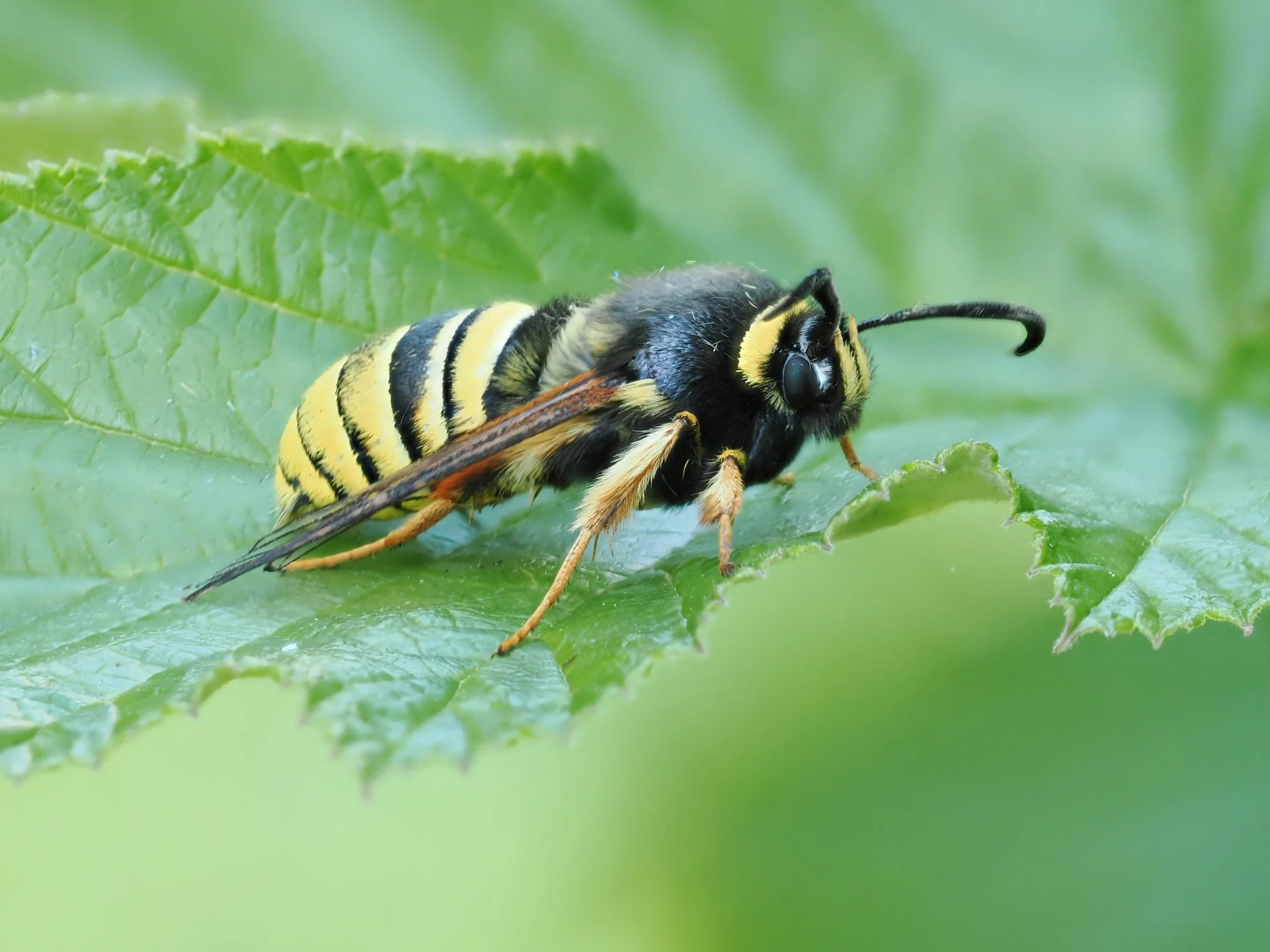
Lunar Hornet moth, a classic species that can be attracted to a pheromone lure
Sugaring & Wine Roping
Two of my favourite methods involve cooking up a sweet feast for moths and then seeing what is gorging themselves in the dark on this delightfully sticky treat. Sugaring and wine roping often attract species that don’t often come to light and some of these species are stunning to look at like the Catocala underwings. Sugar and wine roping tends to work best in Autumn, Winter and early Spring when natural nectar/sugar sources are at a premium.
Sugaring
I use a pretty simple recipe as follows:
· 1 jar of cheap fruit jam
· 1 tin of Black treacle
· ½ bottle cheap red wine
· 2-3 tablespoons of brown sugar
· Splash of cheap spirit (rum/whisky) at the end
Add the jam, wine, treacle and sugar to a sauce pan and very gently warm to just beneath boiling and until everything has blended. Allow the mixture to slowly cool and become increasing viscous. I then decant this into empty 1ltr yoghurt pots with handles which are ideal for storage and transport. The above recipe yields around 60 applications on to trees/posts and I use a wide decorating paint brush to apply two to three 30cm strokes. If you have spare sugar that’s fine. It stores well for months and my experience is that it seems to become more attractive with age. As a result I will often make up large batches and simply store it in the shed for use at a later date. Some people also swear by a adding a couple of drops of amyl acetate to the mixture but I haven’t noticed any obvious increase in attraction as a result.
Once applied you can start checking that night. I normally find that the first three nights are the best after which numbers of moths start to drop off. I typically reapply after 5-7 days. Heavy rain will wash sugar off surfaces so it’s always worth checking it regularly. I have found that many individuals will come back night after night and not just moths but ground beetles, harvestmen, spiders and a plethora of other invertebrates, even Wood Mice! It is also worth checking it by day for butterflies and other inverts.
You can check sugar on any night of the year despite the seasonal biases and I have found moths coming to sugar in sub-zero temperatures in Scotland. In fact, my best night was under a full moon and a temperature of 3 degrees celsius when over 1000 moths came to 25 sugared trees!
Top tip – experiment with different surfaces. Applying sugar to fence posts that have been treated often yields very few moths (no doubt a result of the chemical composition) and different species of tree also have strikingly different yields, for instance Aspen (a naturally sappy tree) often has tens or even hundreds of moths to sugar whereas Scot’s Pine has very few.
Wine roping
A quicker and easier version of sugaring and does what it says on the tin – you soak lengths of rope with red wine and then drape the rope through vegetation where moths come to feed.
Paraphernalia
As you get more and more into mothing you will no doubt start collecting various bits of paraphernalia that will assist with your hobby but two bits of kit that are really essential are specimen tubes and a butterfly net.
Tubes come in a large variety of sizes but places like ALS, Watkins and Doncaster and NHBS have a good selection and I would advise getting more than you think you’ll need! Glass or rigid, transparent plastic tubes are ideal so you can view what’s inside without too much distortion
A Butterfly and/or Sweep net is great for daytime mothing and also catching escapee’s from moth traps. These also come in a variety of sizes but a long handle to a butterfly net is recommended for catching more flighty diurnal species.
Camera
These days pictures are quick, easy and cheap to obtain and simply pointing your phone at a moth will often suffice when it comes to documenting a record. If you use your phone, many will have a x2 or x3 option. These can be useful, especially for micros and try to avoid zooming in beyond the optical capabilities of the phones camera; a x8.6 for instance will be a digital zoom which will ultimately lead to a more pixellated image. Also, remember to have your macro function enabled on the phone.
The best point and shoot camera on the market for moth photography is the OM Systems Tough TG 7.
It is an essential bit of kit for any naturalist and it lives on my hip. The camera has a brilliant macro function including an ultra-macro and can also take stacked images meaning you can get pin-sharp images of even the smallest moth! This can massively aid identification of even the smallest micro moths!
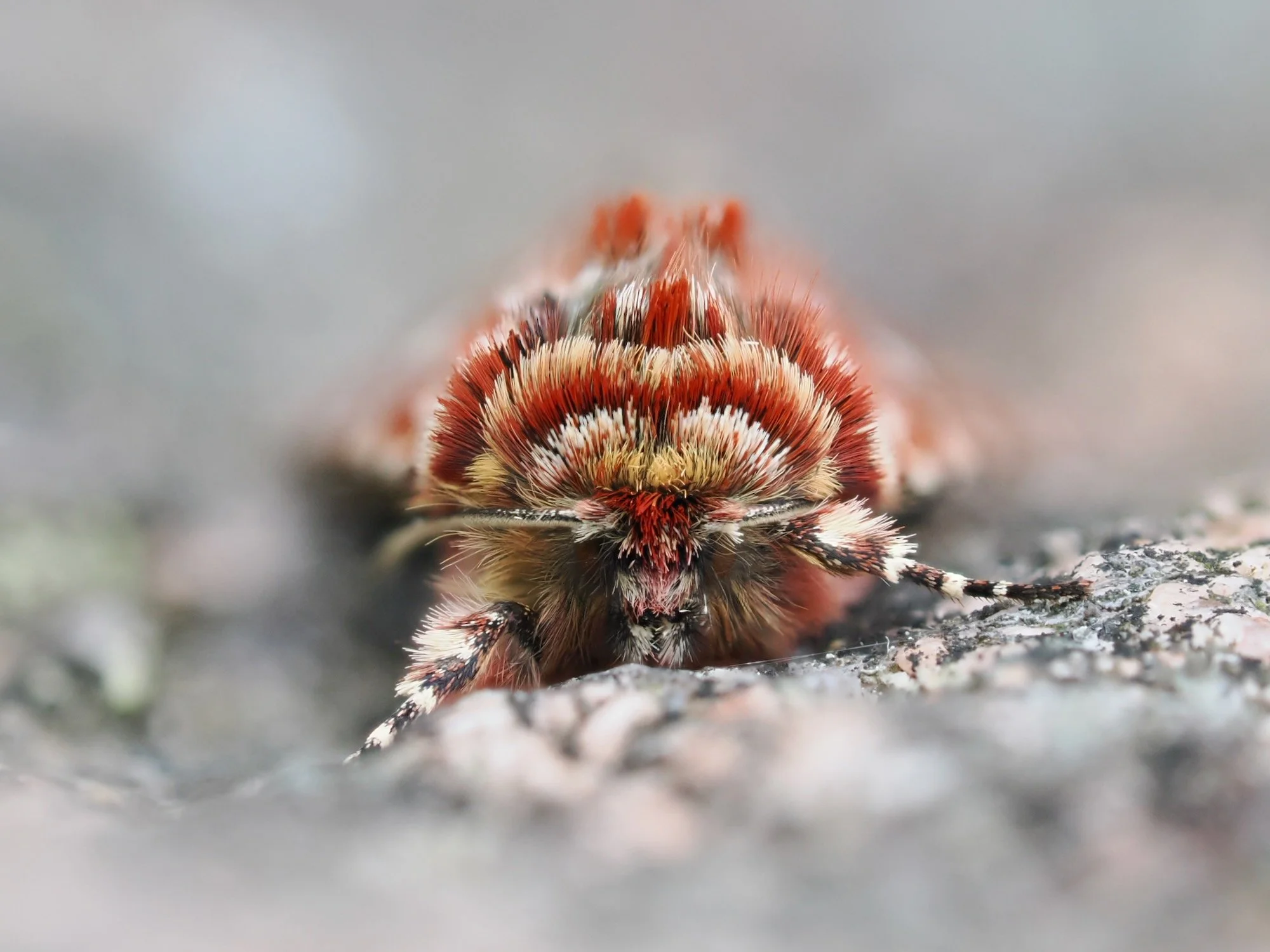
Beautiful Yellow Underwing
We will continue to update this blog with new information, hints and tips and if you want to join a Wild Discovery moth workshop then keep an eye on the page here for updates.
Happy moth-ing!